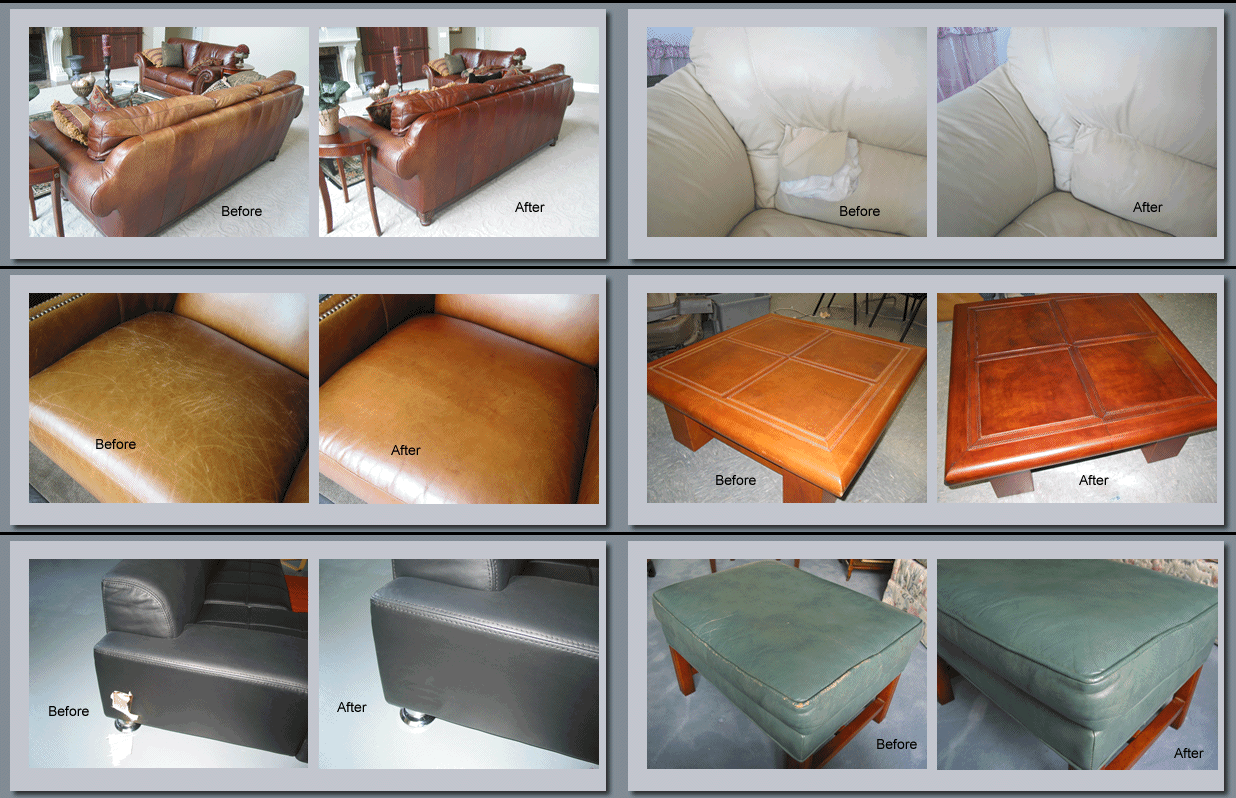
Color Matching
is a huge skill and a must in the leather repair
industry. I've been coming across a few vehicles lately that have been
dyed with not so good color matching. Knowing that it's usually someone
either color blind or just down right...well I won't go that far, but if
the color isn't right then your repair will look worse then if you had
just left it alone.
Good lighting does help and pretty much a necessity. Natural
lighting is better but in the garages we get stuck in the winter months
it doesn't help much, but what do you do, you improvise as my wife says.
I use a dent light, which works pretty good, but I have also have used a
under the hood light bar then hooking inside the car that stretches the
width of the car and hooks on the door jams, they work great. Shorter
light bar are great for light in a small places. Be careful with using
florescence they sometimes throw your tinting off, if you can get some
natural light to your project then great. The customer sees the the car
in natural light mostly anyways so your color needs to be spot on.
Test a spot with a dab of leather dye on your finger, wipe a spot in
the area to be repaired, dry it, and if it disappears, bingo. Otherwise
tint it.
Most of the colors we encounter in today's cars are
tans, grays, blacks of course, some blues, burgundy, not many reds, but I
have seen on Mustangs red bolsters, whites in some, and in the custom
world, Wow look out. A lot of tricks I would love to learn in doing real
custom work like custom airbrushing in the interiors of vehicles,
anyways..
The colors I use the most in my leather repair dyes are Black,
White, Yellow oxide, Red oxide, and Brown. I also use on occasion Green,
Blue, and Purple, rarely Yellow and Red, Silver and Gold for metallics
with Pearl white to offset the side tones, and growing everyday, with
the growing automotive industry. Colors and more colors, fun, fun,
fun...
Of course white and black make gray, and brown and white make tan,
so, add a little black to go grayer with tan or darker with both, white
to lighten, yellow oxide or red oxide to richen the color or to give the
yellow or red tints you see in today's autos, brown works good
sometimes but the browns seem to be on the red side, if it's too red add
green to tone it down. BMWs have a blueish tint to their dyes add a
little blue or purple to the grays, Dodge add a little red oxide to the
dye to give a reddish tone, Infinity's light tan has just a hint of
green to it, Chevy's have a little bit more of a yellow-brown look to
them in the darker dashes adding a little yellow oxide gives you that
tone. Ford has a pretty true grey with a little yellow oxide though in
some cases even add a little brown, this is for both the dark and light.
Ford trucks tan has kinda a pink look to it, in some older models, add
red oxide but they do have a lot of yellow to them too. Cadillac is
pretty easy white and brown with a hint of yellow oxide and a bit if
black, just a little though. With black tone it down for a duller look
with a little bit of white, add your duller and you have flat black
sometimes a little brown too for and older Dodge steering wheel but
eliminate the duller save that for like BMW dash pieces. Dodge light
gray seats add a little purple. Whew..that wore me out. You get the
picture I hope, colors are just one of those things either you get it or
you don't.
Just test each time you add a color and look at it and see what
color it's missing. I use my pigments sometimes to get there a little
faster. If it looks like it needs a color...add it a little at a time
and dab another spot, dry it, then check again. You want it to
disappear. If it does then your ready to go. Add your flex,
cross-linker, strain your paint with a paper paint strainer into the cup
and spray away with your leather dyes on you
leather repair. If I left
something out and your having problems with a color let me know maybe I
can help you figure it out.
I've never really sat down and counted the amount of cars that I
have done in my 10 years in the automotive reconditioning business so
theres been a lot of colors fly in front of my face, the only one that
has ever kicked my butt was teal, wow I spent all day when I first
started on a boat seat that was teal, holy crap, that was back when I
used the lacquer based systems, bad move, I had to give up. With the
water based it is so much better. I found with the water based mix that
green, blue and a touch of white, I got it, I think I added a little
yellow too, I try not to do to many teals, that color and me just don't
get along.
Thats kinda the way I look at it when I go to mixing colors, which I
do all by eye, God help me if I go color blind. I just look at the work
and see the colors. It's pretty cool. Each and every car is different
no matter if they are the same identical vehicles, each one as been
exposed to completely different elements. Every color is different I
promise you, premixed dyes are fine to get you there quicker, but check a
spot first before you go hog wild and just start dyeing. So tint your
dyes, tweak them until they disappear. The color wheel does help, I find
myself every once in a while having a brain fart and can't get a color
right so I pull out the old stand by, if it's the color your trying to
get rid of use it's opposite to get rid of it. Look on the wheel and the
color on the opposite side of the wheel, thats it's opposite. I know
that's not the correct word for that but it sounds good. But I never
start my repair until my color matching is right. If you don't think you
can match it, don't do it. The customer will respect you more for your
honesty. If your color doesn't match then the ending result won't be
perfect, and that's what the customer wants is perfection in leather
repair, or any repair...Right.
Make sure to apply your conditioner after your repair is done on
your leather repairs. It will make your ending result look and feel
better. Top coat all your repairs with a clear topcoat, it only adds
more resistance to the wear and tear and abuse that the vehicles will
encounter instead of just the dye.
If you have anything to add to this article I would love to hear
from you, these tips can be used with all your color matching needs not
just dyeing leather. So please jump on board and lets help all the techs
out there and lend a helping hand so that we can ALL get one more step
closer to perfection in our leather and vinyl repairs, plastic repairs,
velour repairs, and carpet dyeing. for more
go to ........